Warehouse stock checks. A clearer view of your inventory.
Stock checking drones help warehouses verify visible pallet identifiers and storage locations without sending an operator to scan every label manually. By combining an inventory drone with an autonomous mobile robot (AMR), scanning can extend from floor-level locations to higher pallet racking as part of a planned stock-checking route.
Keymas brings together warehouse automation and software expertise to help you assess where drone stock checking could fit into your operation, and how scan results should connect with your inventory processes.
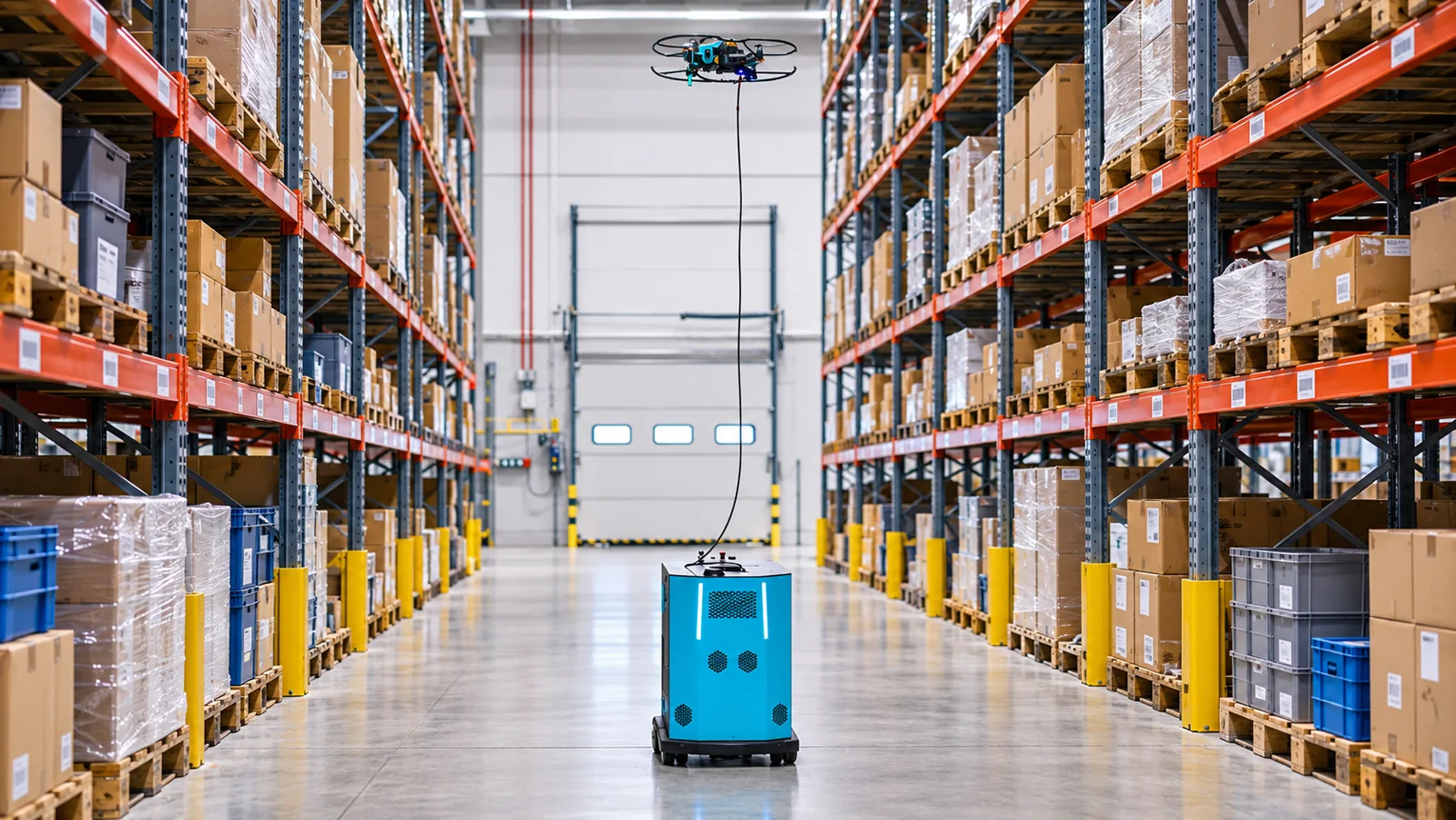
A tethered drone and AMR. Working together.
In a tethered configuration, the drone is connected by cable to a mobile ground robot. The AMR follows the warehouse aisle while the drone positions its camera or barcode reader opposite accessible pallet and location labels.
Depending on the selected equipment, the tether can provide power and a data connection from the ground platform. This supports longer scanning sessions without relying solely on the drone’s onboard battery. The robot, drone, cable management and scanning route need to be considered together during system design.
- Plan the check: select the aisles, storage locations and identifiers to verify.
- Navigate the aisle: the mobile robot follows the agreed route while the drone scans accessible labels.
- Capture the records: associate the scanned pallet identifier with its observed warehouse location.
- Review exceptions: compare the captured information with expected stock records and investigate differences.
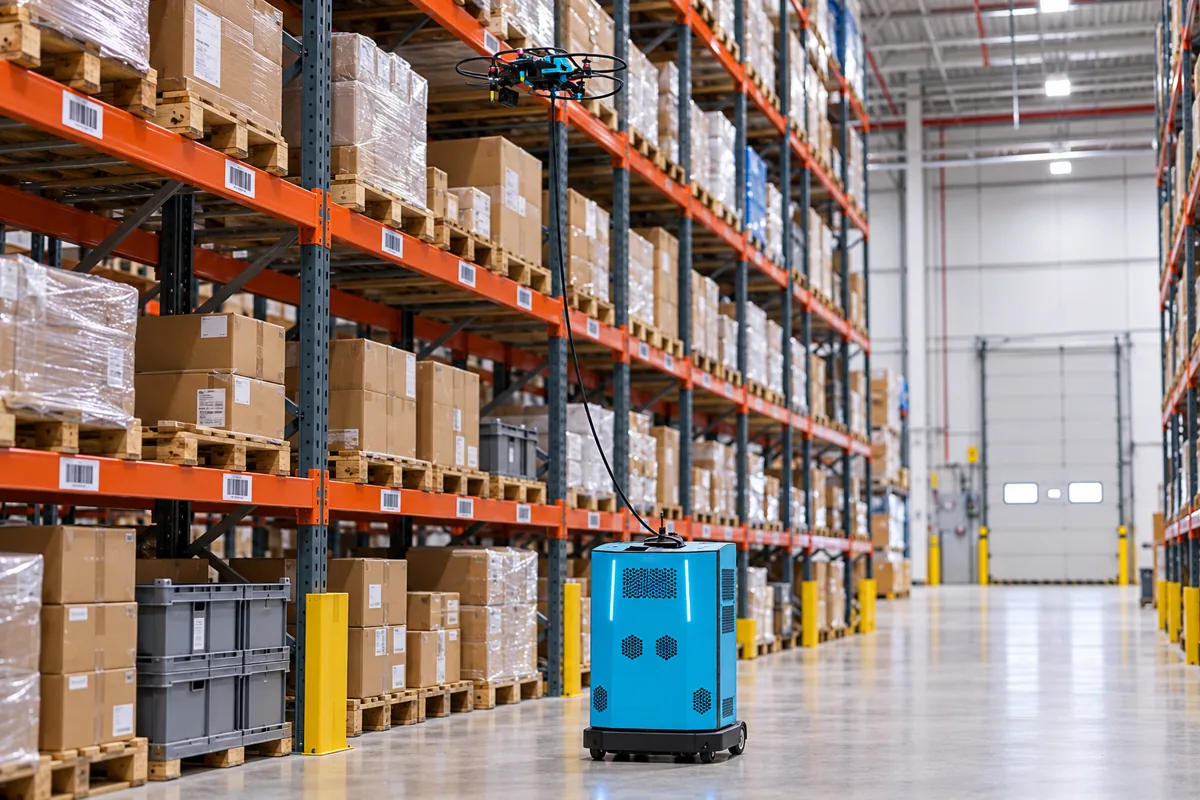
Stock checking that supports your warehouse team.
- Pallet location verification: check whether a visible pallet identifier is where your warehouse system expects it to be.
- Scheduled inventory checks: plan repeatable scanning routes for selected aisles or storage areas.
- Cycle-count support: use captured records to focus the team’s attention on locations that need further investigation.
- Exception reporting: identify mismatched locations, unexpected identifiers and labels that could not be read.
- Less repetitive scanning: reduce the amount of routine label capture performed manually where the application is suitable.
Scanning a pallet label verifies an identifier; it does not automatically prove the quantity of items concealed within a wrapped pallet. Unreadable labels and discrepancies still need an agreed review process.
K-Store WMS. Built-in integration for drone stock checking.
K-Store warehouse management software includes built-in integration for drone stock checking, connecting captured pallet identifiers and storage locations with your warehouse inventory records. This brings drone scanning into the same system used to manage stock, orders and warehouse operations.
By connecting the drone scanning process directly with K-Store WMS, your team can compare observed pallet locations with expected records and investigate discrepancies as part of its stock-checking workflow. Scan results become useful inventory information, with an agreed review process for exceptions and any changes to stock records.
- Connected stock checks: bring drone scan results into your warehouse management workflow.
- Pallet and location verification: compare captured identifiers and locations with the records held in K-Store.
- Exception review: focus the warehouse team on differences and labels that need another check.
- Joined-up warehouse operations: connect inventory checking with the software managing your wider operation.
Keymas scopes the drone equipment, data exchange and checking process around your site and K-Store configuration, so the integration supports the way your warehouse works.
Explore K-Store WMS and warehouse software
Already using another warehouse management system?
For an existing WMS, we assess the available interfaces and reporting requirements as part of warehouse software integration. The project defines how scan results are exchanged and which exceptions require review before stock records are updated.
Designed around your racking, labels and workflows.
A suitability review starts with the warehouse itself: rack heights, aisle widths, floor condition, lighting, label position and barcode quality. Shrink-wrap reflections, obscured labels and the movement of people or other equipment can affect the scanning approach.
Route planning also needs to address obstacles, operating windows, tether clearance, stopping behaviour and supervision. The equipment and operating procedures are selected around the site assessment, with representative scans used to validate the proposed application.
Explore our wider robotics and drone solutions and AMRs and robots, or speak to Keymas about a stock-checking project for your warehouse.
Questions about stock checking drones.
What can a warehouse inventory drone scan?
A suitable scanning system can capture visible pallet identifiers and storage-location labels. The barcode formats, label sizes and reading distances must be checked against the selected equipment.
Why tether the drone to an AMR?
The ground robot provides a mobile platform for the tether and associated equipment. In a powered tether configuration, it can also supply the drone during scanning. Cable management and coordination between the two machines are part of the system design.
Can drone scan results update our WMS?
Results can be exchanged through agreed interfaces or imports where the selected equipment and WMS support them. We define the data flow and exception checks before deciding which updates should be automatic and which require review.
Is drone stock checking suitable for every warehouse?
Suitability depends on access, racking, labels and the operating environment. A site review and scanning trial help establish the practical coverage and identify locations that still need another checking method.